You arrive on-site, the client is watching, and the one piece of expensive kit you need is nowhere to be found. It's a gut-punching moment that every independent operator knows too well. You probably spent your Sunday evening wrestling with a bloated spreadsheet, yet here you are, losing money because your data is out of sync. It's exhausting. We all know that relying on a manual system for tracking assets and equipment is a recipe for errors, especially as ISO 55001 standards in 2026 now require much tighter lifecycle documentation. You need a way to stop the bleed without being held ransom by monthly software fees for features you'll never actually use.
This guide shows you how to reclaim your time and your sanity. We'll explore how to move away from messy, error-prone files and into a streamlined, bespoke tracking system built specifically for your workflow. You'll discover how to create a single source of truth for every tool you own, making check-ins and check-outs as simple as a few taps on a phone. We'll look at how to get a fixed-cost solution that organises your business without the hidden monthly fees or unnecessary complexity that usually comes with off-the-shelf software.
Key Takeaways
- Learn why your staff's existing mobile phones are the only scanners you really need. It'll save you a packet on specialised hardware.
- Find out how to escape the "spreadsheet wall" with a bespoke system for tracking assets and equipment that actually grows with your business.
- Stop the "SaaS tax" from bleeding you dry. See why paying for 100 features when you'll only use five is a mug's game.
- Master the physical audit. Learn why you need to touch every piece of kit before it ever hits your new digital database.
- Match your tracking tech to the item's value. Discover how to avoid over-engineering the way you monitor your lower-cost tools.
Why Your Current Asset Tracking Method is Costing You More Than a New System
You might think you're saving money by sticking with the old ways. But "making do" is often the most expensive choice you can make. A proper system for tracking assets and equipment is a digital database that monitors the location, condition, and custody of every physical item you own. It's the difference between knowing your gear is in the van and hoping it's there. Without it, you're just guessing. This isn't just about location; it's about accountability and keeping your business moving.
As you look to move away from manual tracking, you can learn more about Repair-CRM to see how mobile field service software supports business digitisation.
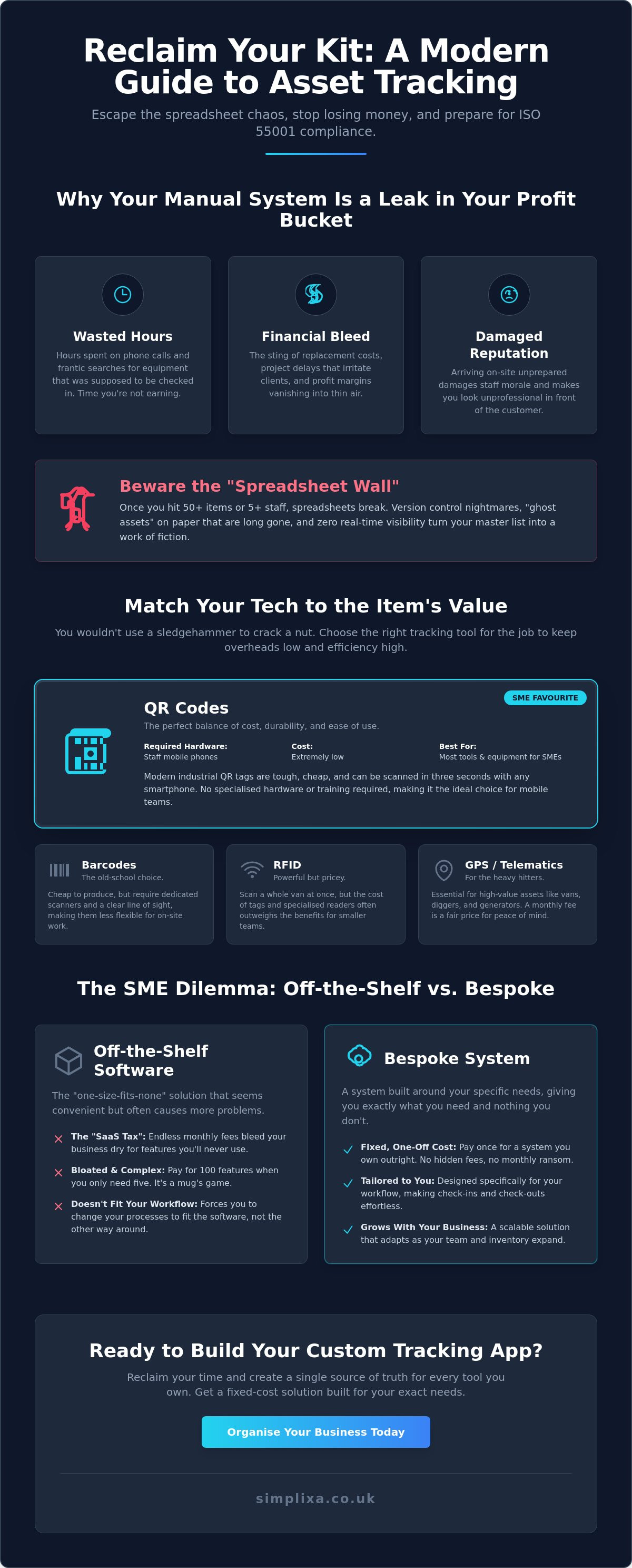
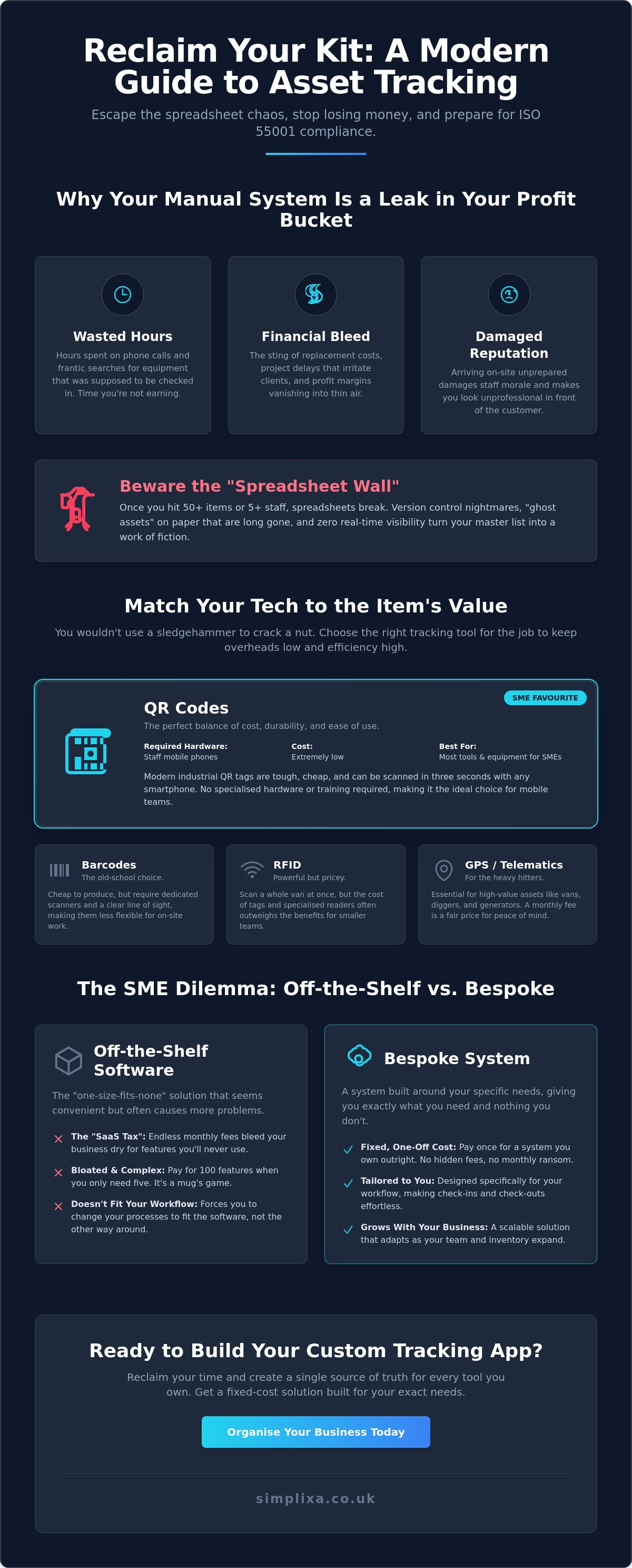
Most businesses start with a simple list. It works fine when it's just you and a few drills. But once you hit 50 items or five staff members, you hit the "Spreadsheet Wall". Data gets messy. People forget to update the file. Suddenly, your master list is a work of fiction. You end up spending hours on phone calls, chasing kit that was supposedly checked back in last Tuesday. These aren't just administrative hiccups. They're leaks in your profit bucket.
The Real Cost of Lost Equipment in the UK
Every time a piece of kit goes missing, it's not just the replacement cost that stings. It's the hour spent driving to the shops. It's the project delay that irritates your client. It's the profit margin on that job vanishing into thin air. When staff arrive on-site and realise the gear they need is still at the depot, morale takes a massive hit. Nobody likes looking unprofessional in front of a customer. The Replacement Ratio is the percentage of your total asset value spent on replacing lost or broken kit each year, serving as a vital health check for your business operations.
Why Spreadsheets are a Liability, Not a Tool
Excel was never meant to be a real-time asset tracking tool. When three different people have three different versions of the same file, you've got a version control nightmare. Manual entry is prone to "ghost assets", which are items that exist on paper but disappeared from the warehouse months ago. There's also the security side. Leaving sensitive data about expensive equipment in an unprotected file is a massive risk. A dedicated system for tracking assets and equipment removes the guesswork, allowing you to move from reactive fire-fighting to proactive management.
Choosing the Right Tech: Barcodes, QR Codes, or GPS?
Picking the right tech isn't about buying the shiniest gadget. It's about logic. You don't want to spend £100 on a high-end tracker for a £50 drill. That's just bad business. Your system for tracking assets and equipment should be a sensible mix of tools that match the value of what you're protecting. Getting this balance right keeps your overheads low and your sanity intact. Some items need a simple sticker. Others might need a satellite link. The key is knowing which is which.
When people ask What is asset tracking? they often imagine complex radar screens and blinking lights. In reality, for most independent operators, it's about simple, reliable identification. Barcodes are the old-school choice. They're cheap, but they require dedicated scanners and a clear line of sight. RFID is the fancy cousin. It allows you to scan a whole van's worth of kit at once without even opening the doors. It's a dream for a massive warehouse, but for a small team, the cost of the hardware usually outweighs the benefits.
QR Codes: The Small Business Favourite
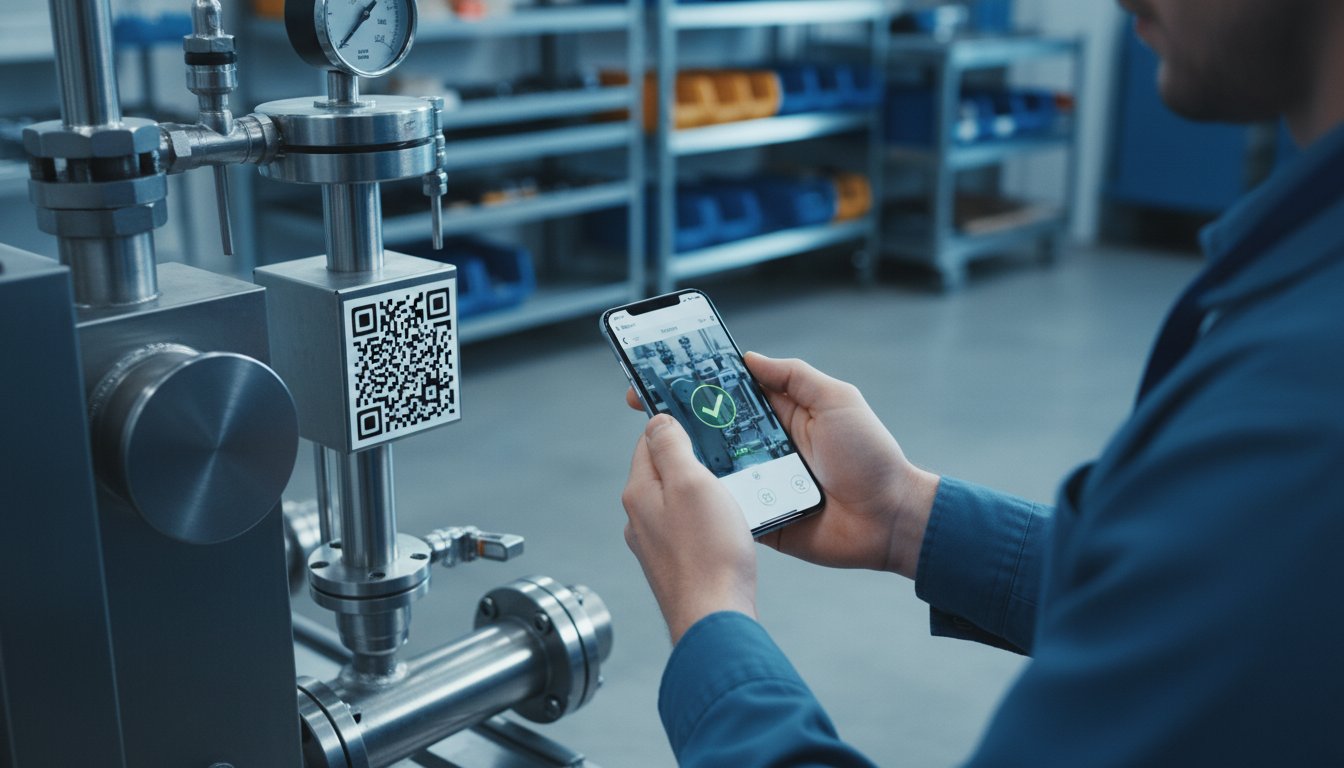
QR codes are the absolute sweet spot for most SMEs. They're incredibly cost-effective to produce and tough as old boots. Best of all, your staff already have the scanners in their pockets. Their mobile phones are the only tools they need to check kit in or out. Using a custom staff tracking app, they can scan a tool in three seconds flat. No specialised hardware. No massive training sessions. Modern industrial tags are designed for harsh environments, so they'll stay stuck and readable even amongst the mud and dust of a construction site.
When to Invest in High-Tech Tracking
GPS and telematics are reserved for the heavy hitters. Think diggers, generators, or the vans themselves. If an item is worth thousands or sits in a high-theft area, a monthly subscription fee is a fair price for peace of mind. Bluetooth "pings" are great for finding kit within a specific depot or centre, but they won't help you if a trailer goes missing from a site fifty miles away. You need to be honest about your risks. Don't over-engineer a solution for a hammer, but don't leave a £20,000 excavator to chance. Not sure which tech fits your fleet? Let us help you map your requirements so you only pay for what you actually use.
Off-the-Shelf Software vs Bespoke Systems: The SME Dilemma
Choosing a system for tracking assets and equipment often feels like being stuck between a rock and a hard place. You can either struggle with a manual mess or sign up for a shiny subscription that promises the world. Most small businesses go for the subscription. It looks cheap on day one. But over three years, that "SaaS Tax" starts to bite. Those per-user monthly fees quietly bleed your bank account dry whilst you're busy trying to get the actual work done. It's a recurring cost that never ends, even when your business isn't growing.
Beyond asset management, this "tax" often hides in your office software; you can find out more about how LicenseIQ identifies and recovers wasted spend on Microsoft 365 licences.
Then there's the issue of feature bloat. Most off-the-shelf platforms are built for everyone, which means they're built for no one in particular. You end up paying for 100 different features when you only actually need five. The extra 95 just clutter your screen and confuse your staff. It's a waste of money and a massive waste of time. Worse still, your business intelligence is often locked inside someone else's platform. If they hike the prices or go bust, your data goes with them. A bespoke system flips this on its head. You own the tool. You own the data. It's yours, forever.
Understanding Fixed-Price vs Subscription Models
When you look at the total cost of ownership over 36 months, the maths is eye-opening. Subscription software might cost less than a round of drinks today, but the cumulative cost over three years is often staggering. A custom build is a one-off project cost. Once it's done, it's done. There's a massive psychological relief in knowing your overheads are fixed. No hidden surprises. No sudden price hikes. Even "free" software usually ends up being the most expensive option because of the endless hours lost to clunky workarounds and manual fixes.
Workflow Fit: Does the System Speak Your Language?
Rigid software templates force you to change how you work. That's backwards. Your technology should fit your business, not the other way around. Custom apps allow you to use the terminology your team already uses. Whether you talk about "kit bags", "depots", or "van stock", the app speaks your language. This makes training a doddle. It's also vital that the system works in low-signal areas. UK field staff are often working in the middle of nowhere. A bespoke system for tracking assets and equipment can be built to handle offline data, ensuring your records stay accurate even when the 5G signal vanishes.
Mapping Your Assets: A Practical Guide to Getting Organised
Setting up a new system for tracking assets and equipment isn't just about the software. It's about getting your house in order. If you simply upload a messy, outdated spreadsheet, you'll just have a digital version of the same mess. You need a clean break. This is your chance to bin the "ghost assets" that have been sitting on your books for years and start with a fresh, accurate record of what you actually own.
The first step is a physical audit. You must touch every piece of kit before it goes into the new system. It's a bit of a slog, but it's the only way to be sure. Check the serial numbers. Verify the condition. If a drill is rattling, mark it down. This process ensures that your "source of truth" is actually true. Once the audit is done, you can retire the old spreadsheet for good. Delete the file. Burn the printouts. From this point on, if it isn't in the system, it doesn't exist.
The 3-Category Framework for SME Assets
Don't treat a box of screws the same way you treat a mini-digger. It'll drive you mad. Organise your kit into three distinct buckets to keep things manageable:
- Consumables: Low-value items like drill bits or PPE. Track these in bulk, not individually.
- Tools: Medium-value gear like power saws or ladders. These need individual IDs and clear custody records.
- Plant: High-value machinery or vehicles. These require detailed maintenance logs and GPS tracking.
Maintenance alerts are the most underrated feature of a tracking system because they stop a £50 routine service from turning into a £5,000 engine replacement. For high-value renewable energy assets like solar PV or battery systems, precise maintenance and lifecycle tracking are essential—a standard of care exemplified by specialists like qualis.energy. By setting different rules for each category, you save your staff from unnecessary admin whilst keeping the expensive stuff safe.
Training Your Team for Success
Your team might be wary of new tech. They might think it's a "Big Brother" move to watch their every move. Be honest with them. Explain that this is a tool to make their lives easier. It's about making sure they never arrive on-site without the right gear. It's about stopping the Friday afternoon scramble to find a missing generator. You need to define clear permissions: who can scan, who can edit, and who sees the big-picture reports.
Success depends on the 30-second rule. If it takes longer than 30 seconds for a staff member to check out a kit bag, they won't do it. The process has to be frictionless. See how we build simple tools for busy teams that replace clunky paperwork with a few quick taps on a phone. When the system is this easy, compliance happens naturally.
Building Your Custom Tracking App with SIMPLIXA
You've already seen why the old ways of working are a physical burden on your business. Now, let's talk about the solution. At SIMPLIXA, we don't do "bloated". We don't believe in selling you a thousand bells and whistles that just get in your way and slow you down. A system for tracking assets and equipment should be lean and mean. It should do exactly what you need it to do and nothing else. We take your messy, error-prone spreadsheets and turn them into a professional digital tool that actually makes your life easier. No more "ghost assets". No more Sunday nights spent staring at rows of broken data.
One of the biggest irritants with traditional agencies is the "hidden surprise". You get an estimate, then it doubles halfway through the project. Or you're hit with per-user fees that effectively punish you for hiring more staff. We don't play that game. SIMPLIXA offers fixed-price certainty. You know exactly what you're paying from day one. No hourly rates. No per-user "SaaS tax". It's a fair way to do business, and it means you can plan your budget with total confidence. We build it, you own it, and the cost stays put.
What Your Bespoke Asset App Could Look Like
Imagine your field staff checking kit in or out with just two taps on their phone. That's the power of a custom staff tracking app. No more paper logs. No more "I forgot to write it down". You get a management dashboard that shows you exactly what is where, right now. It's the ultimate source of truth. We can even build in automated alerts for things like PAT testing, calibrations, or vehicle MOTs. It's like having a digital assistant that never sleeps, ensuring your inventory management system is always up to date and compliant.
The SIMPLIXA Process: Simple, Fast, Effective
We start with the Discovery Phase. We don't lecture you on how to run your business. We listen. We want to know how you actually work on the ground, not how a software manual says you should. Once we understand your workflow, we move to rapid deployment. We're talking weeks, not months. Our goal is to get your system for tracking assets and equipment live as quickly as possible so you can start feeling the relief of being organised. SIMPLIXA handles the hosting and the security, ensuring the system stays fast and safe as your business grows. It's about moving you from a state of being overwhelmed to a state of complete control.
Take Control of Your Kit and Your Time
You've seen how messy spreadsheets and bloated subscriptions act as physical burdens on your daily operations. Moving to a bespoke system for tracking assets and equipment isn't just a technical upgrade; it's about clearing the mental fog of "making do". You need a tool that mirrors your specific workflow without the constant drain of monthly per-user fees or features you'll never touch. By matching your tracking tech to the value of your gear and establishing a true source of truth, you're finally back in the driver's seat. No more ghost assets. No more missing drills. Just a streamlined business that knows exactly where its profit is sitting. If you are also planning a physical relocation, VP Smart Removals can ensure your assets are moved with the same level of precision and care.
Ready to bin the paperwork for good? Get a fixed-price quote for your custom asset tracking tool. We focus entirely on fixed-price project delivery designed specifically for UK small businesses. You get the relief of an organised warehouse and the certainty of no hidden monthly subscriptions. It's time to stop chasing your tail and start running your business with total confidence. Let's get it sorted.
Frequently Asked Questions
What is the best way to track small tools and equipment?
The most effective method for tracking smaller items is using durable QR code stickers paired with a mobile app. This setup is far cheaper than GPS and more flexible than traditional barcodes. To see how these systems work in a real-world environment, you can discover Team-Trak and its specialised QR features. Your staff can then use their own phones to scan tools in and out, ensuring you always know who had the kit last without buying expensive specialised hardware.
How much does a custom asset tracking system cost in the UK?
The cost of a bespoke system depends on the specific features your business needs to stay organised. Unlike standard software that charges you every month for every staff member, we focus on a fixed-price project model. This means you pay once for the build and own the tool forever, avoiding the long-term drain of a "SaaS tax".
Can I use my mobile phone as a barcode scanner for asset tracking?
Yes, modern smartphones are perfect for this task. Their cameras are more than powerful enough to read QR codes or barcodes in various lighting conditions. By using a custom staff tracking app, your team can manage inventory directly from their pockets, which removes the need for bulky, expensive handheld scanners that often get left behind or broken.
Is bespoke software better than off-the-shelf for a small business?
Bespoke software is usually better because it's built around your existing "good" habits rather than forcing you to change. Off-the-shelf platforms are often bloated with 100 features when you only need five. A custom tool is leaner, easier to learn, and doesn't come with the hidden per-user fees that make standard software so expensive as you grow.
How do I prevent staff from losing equipment on-site?
Accountability is the best deterrent for lost kit. When you have a simple check-in and check-out process that takes less than 30 seconds, staff are much more likely to use it. If every tool is digitally linked to a name before it leaves the depot, the "it was just gone" excuses tend to vanish. It creates a culture of responsibility without feeling like a burden.
What happens if we lose internet connection while scanning assets?
A high-quality system for tracking assets and equipment should include offline functionality. We build apps that store scan data locally on the device when the signal is poor. As soon as the staff member moves back into a 4G or Wi-Fi area, the system automatically syncs the data to the central database so your records stay accurate.
Do I need to buy expensive tags for every piece of equipment?
No, you should match the tag to the value of the asset. Use simple, industrial-grade QR stickers for handheld tools and reserve expensive GPS trackers for high-value plant or vehicles. For transport operators, Fleetalyse offers a way to extend this visibility into driver compliance through remote tachograph downloads. This tiered approach keeps your initial costs down whilst ensuring your most valuable assets have the highest level of protection and visibility.
How long does it take to move from a spreadsheet to a custom app?
Most businesses can make the switch in just a few weeks. The process involves a physical audit to clean up your data, followed by the rapid deployment of your custom system for tracking assets and equipment. Once your data is verified and the app is built to your specs, getting the team trained and live happens very quickly.